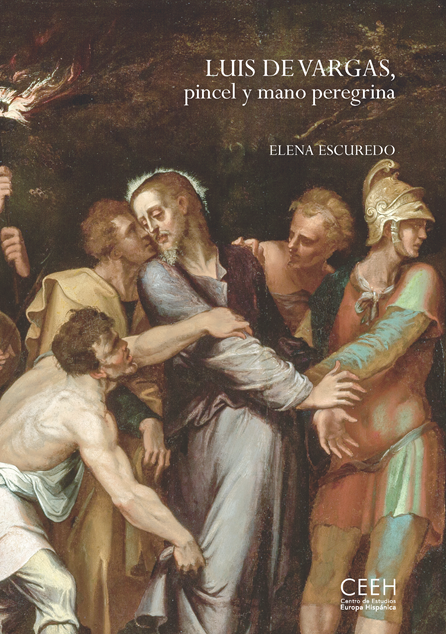
Luis de Vargas, pincel y mano peregrina
Elena EscuredoEditorial: Centro de Estudios Europa HispánicaISBN: 9788418760563
Sinopsis
Luis de Vargas, a painter seldom studied despite his importance to sixteenth-century Spanish art, returned to Seville in 1550 after two long decades in Italy and burst onto the local art scene, ‘blazing a new trail with his light’, as Pacheco put it. While Hernando de Esturmio (Ferdinand Sturm) and Pedro de Campaña (Pieter Kempeneer) had marked the beginning of a new stage in Sevillian painting in 1536, Vargas superseded this Flemish influence and introduced the maniera inherited from Perino del Vaga, Giorgio Vasari and Francesco Salviati, becoming a revered, sought-after and imitated artist. Written sources highlight his skill as a portraitist, but he must also have been an extraordinary fresco painter. However, the key to understanding his Roman training and later work lies in his drawings, which reflect the aesthetic universe that characterised his entire oeuvre.